Sonic Vision
Explore the auditory landscape of 'Don’t Ask My Name'
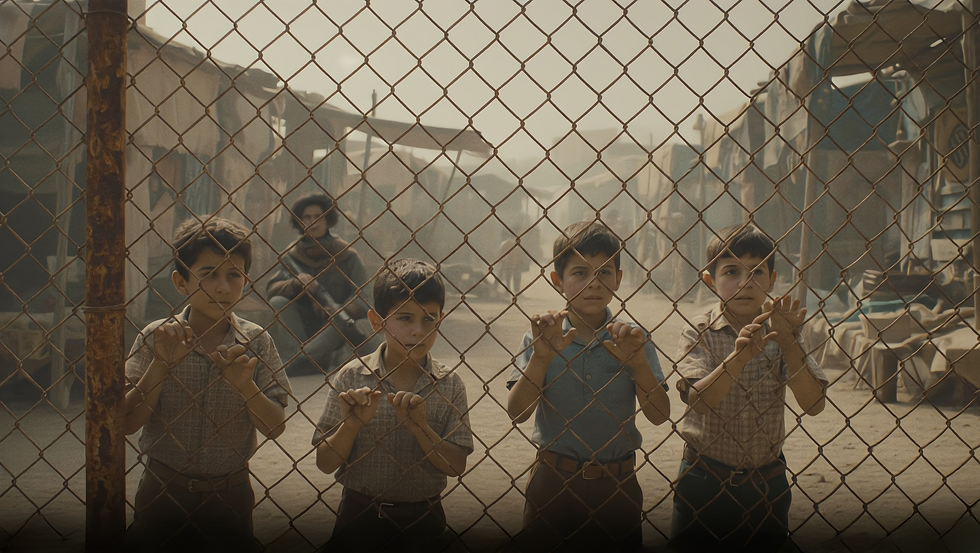
Prologue:
"THANKS Alot"
The Anatomy of Displacement (Scenes 1–4)
The prologue of the film is scored entirely by The Sea -Ders’ "THANKS A LOT." This choice serves as an immediate, authentic cultural anchor, capturing the shifting tides of 1967 Lebanon. By pairing a driving, 1967 beat with traditional Levantine strings, the soundscape mirrors a society on the precipice of fracture, where Western-influenced modernisation collides with the harsh realities of geopolitical displacement.
-
The Orchestration: The track’s distinctive, bright buzuq riff and driving garage-rock drumbeat act as a psychological engine for the prologue. The bright energy of music combined with tragic visuals signals a world about to bend and buckle. The lyrics bring an immediate sense of irony and desperation to the scenes. "Thanks a lot," acts as a biting, subtextual commentary on the broken promises of regional stability and the crushing humiliation of human displacement.
Part I: The Illusion of Order (Scenes 1–2)
-
The Musical Cue: OVER BLACK, the driving drumbeat and bright buzuq riff blast in crisp, studio-quality non-diegetic stereo. The moment we FADE IN on the thick, sweltering air of the UNRWA bus, the track sharply transitions to diegetic. The stereo depth flattens, compressing into the tinny, scratchy speakers of a cheap dashboard radio fighting against the low-frequency groan of the bus engine.
-
The Cinematic Effect: As the tired passengers sway in a rhythmic, hollow unison, the radio track ducks heavily into the background, allowing the voice-over "They used to call it the Paris of the Middle East..." to cut through the atmosphere, framing the music as the literal heartbeat of a beautiful era that is actively being choked out by geopolitical instability.
Part II: The Rupture of Reality (Scene 2 continued)
-
The Cinematic Effect: As the visual transitions to the sprawling, indigo-scarred sea of tents at Tel Al Zaatar, the music remains buried in a muffled, compressed mix. Layered beneath the track, the raw, organic environment takes over: the desperate sounds of babies crying, hungry dogs barking, and the jaded movement of scuffling adults bleed into the forefront. The music there through the radio but barely.
Part III: The Predatory Transition (Scenes 3–4)
-
The Musical Cue: As Zayan lugs his battered suitcase down the steps, the auditory focus zeros in on his isolation. Thuds of his suitcase dropping down each step, the screeching of the bus door as it slams shut behind him. Across the way, a lone man cleans his weapon but something is off - other refugees know to stay well away.
-
The Stereo Smash: The moment Zayan locks eyes with that same predatory EXTREMIST refugee, the track smashes back into full, non-diegetic studio stereo surround sound. It expresses a strange hope for a lost child, someone who 'cares', all while driving the irony of it actually being 'Satan' himself calling his name.
-
The Cinematic Effect: The sudden, aggressive re-entry of the full band creates an operatic climax to the prologue. The driving drumbeat and buzuq riff carry over the landscape transition to Heri Village in Scene 5, settling on the quiet image of Omar and Mohammed perched on the weathered limestone wall. The anthem of displacement dissolves into the background, giving way to the ambience and everyday sounds of the coastal valley.
Key Lookbook Takeaway for Investors:
By utilising an authentic 1960s Lebanese garage-rock track like 'Thanks A Lot,' we immediately showcase a Lebanon that history often forgets: a nation that was fiercely progressive, deeply connected to Western musical movements, and bursting with cosmopolitan energy. Crashing this vibrant, studio-quality rock anthem into the harsh, compressed reality of a refugee camp allows the audience to physically feel the tragic loss of a displaced Palestinian people and a Lebanese golden era.

Tane Upjohn - Beatson
SOUNDTRACK
For much of the soundtrack, we are leaning heavily into the structural DNA of Tane's work - specifically his brilliant use of indigenous, wind & earth woodwinds and primal percussion to build tension. However, we will re-map that geography. Everywhere Tane would utilise Taonga Pūoro for breath, wind, or ancient sorrow, we are substituting raw, organic Levantine instruments like the Nay, the Rababa, and the Bendir. We want that same minimalist, haunting reverence for the earth, but born from the dust of 1960s Lebanon.
References
Factional Names vs. The Name Above All Names
(ScENES. 53–58)
The structural and emotional climax of the film is scored entirely by a reimagined, grittier version of Mitch Wong’s "THE NAME ABOVE ALL NAMES." This choice serves as a direct, deeply layered counter-thematic response to the script’s title and its central human conflict:
To ground this anthemic track into the raw, bleeding heart of the Levant, the traditional Western instrumentation will be stripped away and replaced with classical Lebanese instruments, radically enhancing the sequence’s dramatic intensity.
By layering a soaring anthem of absolute divine sovereignty over a localised scene of horrific sectarian violence, the sound design creates a deeply moving, operatic juxtaposition.
-
The Orchestration: The driving rhythm will be fueled by the heavy, thudding cadence of the darbuka and riq, mirroring a frantic heartbeat under fire. The melody will be carried by the piercing, melancholic cry of the oud and a weeping nay flute, transforming a modern worship song into an ancient, cinematic lament.
-
The Vocal Delivery: The male vocalist will deliver the lyrics with a raw, soulful desperation. His tone will carry the heavy, gravelly weight of a man clinging to his faith in the middle of a warzone - less a Sunday morning declaration, and more a breathless plea for divine intervention.
Part I: The Humble Silence (Scenes 53 - 54)
-
The Musical Cue: As the tension builds inside the house, the track begins quietly under the dialogue, focusing heavily on a solitary, un-reverbed oud playing Verse 1 "God became a man / He was humble as a Lamb..." over the moment where ELI looks at his father only to be met with a hardened resolve.
-
The Cinematic Effect: The vulnerable, acoustic opening acts as a tragic background texture while the Daygar family faces the ultimate betrayal from childhood friends. It highlights the contrast between Christ's humility and the pride of radicalised militia crossing the threshold
Part II: The Operatic Eclipse (Scene 55)
-
The Musical Cue: The exact moment Joseph fires the fatal shots (CRACK-CRACK) and the real-world audio design completely drops out, the song dramatically hits the Chorus "You're the Name above all names...".
-
The Cinematic Effect: The sudden explosion of traditional percussion and a desperate, soaring vocal over a slow-motion sequence of violence (Carla getting shot in the face, Joseph being hit) creates a powerful cinematic vacuum. It shifts the audience’s perspective from a standard action shootout to an internal, spiritual experience of grief and survival.
Part III: The Battle for the House (Scenes 56 - 57)
-
The Musical Cue: As a storm of gunfire and grenades utterly besieges the house, the music drives relentlessly into the escalating Bridge "There's only so long Babylon can stand...".
-
The Cinematic Effect: The gunfire, explosions, and screaming are kept muffled and secondary in the mix, completely overwhelmed by the driving, aggressive rhythm of the darbuka. The lyrics "He's coming with fire burning in His eyes..." create a terrifyingly epic background to the literal fire and destruction tearing through the Daygar family home, framing the earthly chaos as a reflection of a broken spiritual world.
Part IV: The Residual Echo (Scene 58)
-
The Musical Cue: As the gunfire abruptly halts and Tony falls to his knees, mortally wounded, the heavy percussion strips away entirely.
-
The Cinematic Effect: The booming declaration of the song fades out, leaving only a solitary, trembling vocal line and a lingering drone from a nay flute that bleeds perfectly into the smoke-filled, terrifying silence of the aftermath.
Key Lookbook Takeaway for Investors:
Our film is titled Don’t Ask My Name, a plea born out of a war-torn reality where your identity can be a death sentence. Scoring our darkest, most violent sequence with 'The Name Above All Names' creates a brilliant thematic friction. It reminds the audience that while men are down on earth slaughtering each other over earthly names and borders, the Daygar family's survival rests on a hope that transcends the conflict entirely